Epoxy Flooring in Tinley Park, Built on a Ground and Tested Slab

Garage, basement and commercial floor coatings with a moisture test, a named product line and a stated thickness in every written proposal.

Tinley Park Epoxy Flooring has spent more than 20 years putting down epoxy flooring in Tinley Park, IL, from attached two-car garages and split-level basements to dealership service bays, restaurant kitchens and light manufacturing floors. We grind or shot blast every slab, test it for moisture, and build the coating to a stated thickness, so the floor you pay for is the floor you can measure.

Our work covers epoxy garage floors, basement floor epoxy, flake and metallic systems, polyaspartic topcoats, polished concrete and the commercial and industrial floors that carry forklifts, hot water and daily cleaning. Each job starts the same way, with a look at the slab, a crack and coating map, and a written scope that names the product line, the number of coats and the finished thickness.

That proposal also states the moisture test we will run and what the result changes. Concrete in the south suburbs was poured to many different specs over the decades, and the only honest way to price a coating is to know what the slab underneath is doing before anyone mixes a kit.

Get Your Free Quote

Fast response • No obligation

So we can reach you about your request.

So we can send you a confirmation after you submit this inquiry form.

  • 20+ Years Coating Floors
  • Moisture Test in Every Scope
  • Free Written Estimates

What we do

Our Services

Ground, tested and coated epoxy floors for Tinley Park homes and businesses

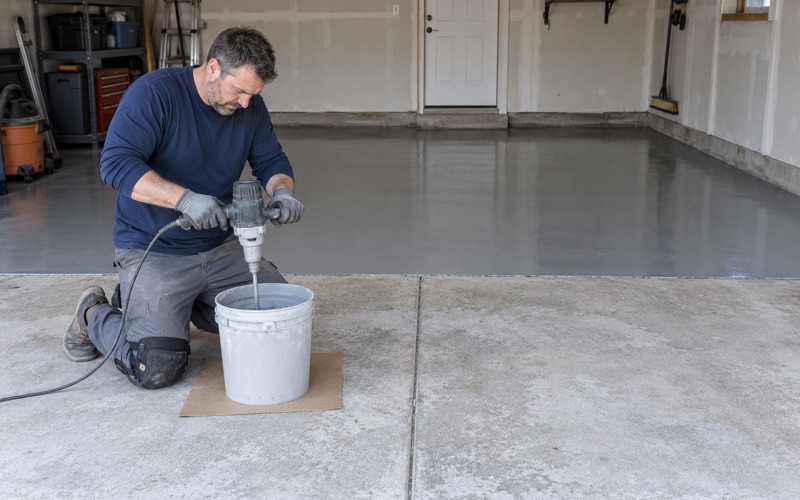
Epoxy base coat being mixed in the attached garage of a Tinley Park two-story, half the ground slab already coated.

Epoxy Garage Floor

Ground, moisture-tested epoxy garage floors with flake or solid finishes and a topcoat built for salt, brine and hot tires.

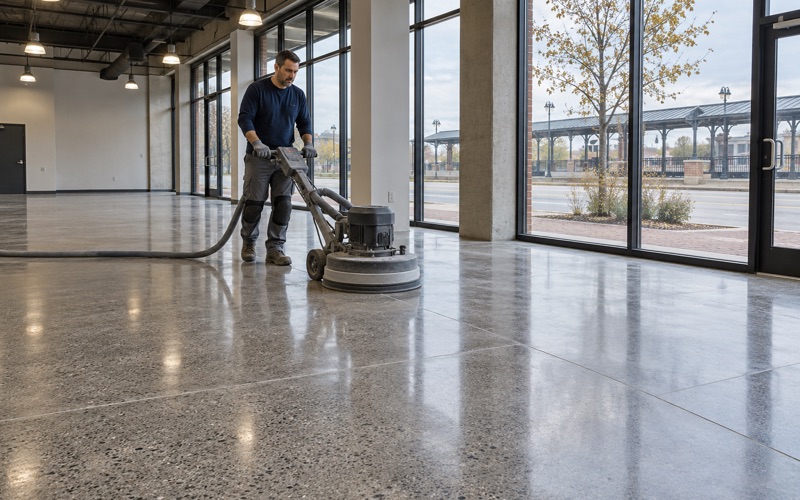
A walk-behind polisher bringing up the sheen on a polished concrete retail floor in downtown Tinley Park.

Polished Concrete Floors

Ground, densified and polished concrete floors for showrooms, offices, basements and shops, with the aggregate exposure and sheen you choose.

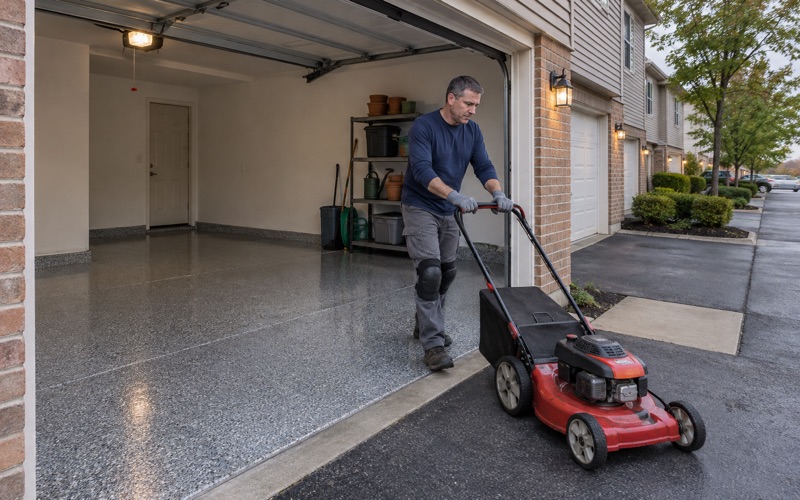
A lawn mower rolled back the same evening onto a new polyaspartic floor in a Tinley Park townhouse garage.

Polyaspartic Floor Coating

Fast-curing, UV-stable polyaspartic floor coatings for garages, showrooms and service bays, installed over a ground and moisture-tested slab.

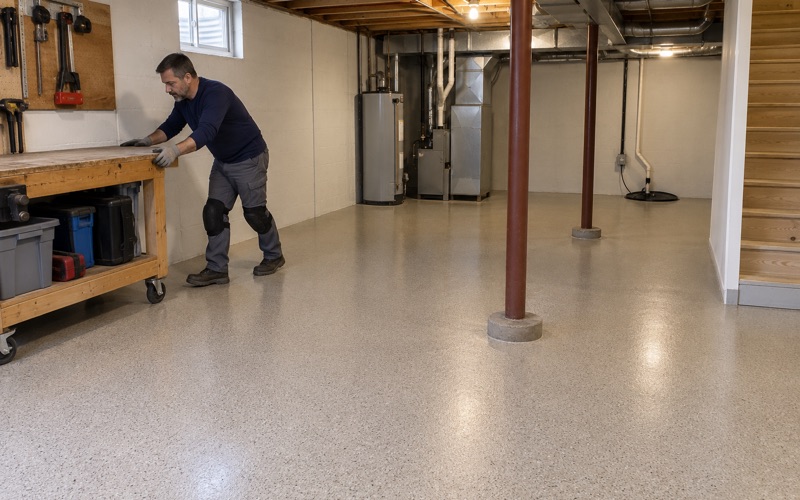
A workbench rolled into place on a newly coated full basement floor in a Tinley Park two-story.

Basement Floor Epoxy

Basement floor epoxy that starts with a real moisture test, removes old paint and mastic, and works around sump and ejector pits.

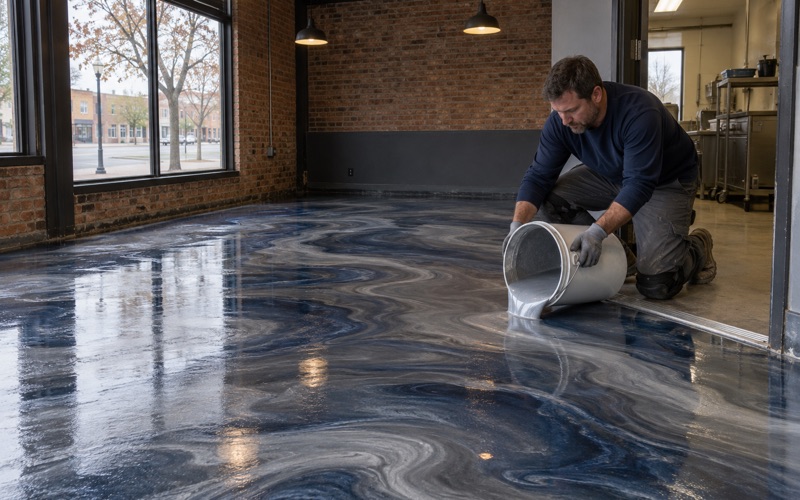
Silver and midnight blue metallic epoxy poured across a coffee shop floor on Oak Park Avenue in Tinley Park.

Metallic Epoxy Floor

Marbled metallic epoxy floors for basements, showrooms, salons and garages, poured over a flat ground slab and sealed with a UV-stable topcoat.

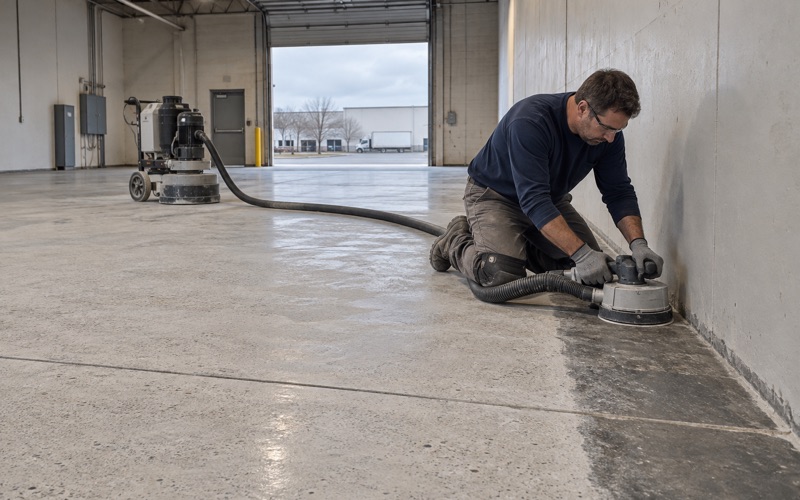
An edge grinder with a vacuum shroud opening up the slab along the wall of a Tinley Park industrial suite.

Concrete Grinding

Diamond grinding and shot blasting that strip old coatings and mastic and leave a measured profile ready for a coating or polish.

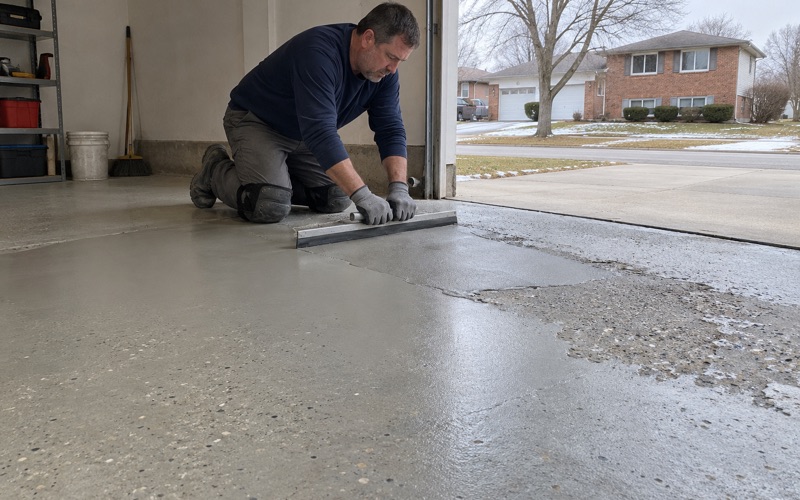
Resurfacer squeegeed across a salt-scaled band at the door of a Tinley Park attached garage before coating.

Concrete Floor Repair

Crack, spall, joint and salt-damage repair for interior concrete floors, done before coating and with an honest call on replacement.

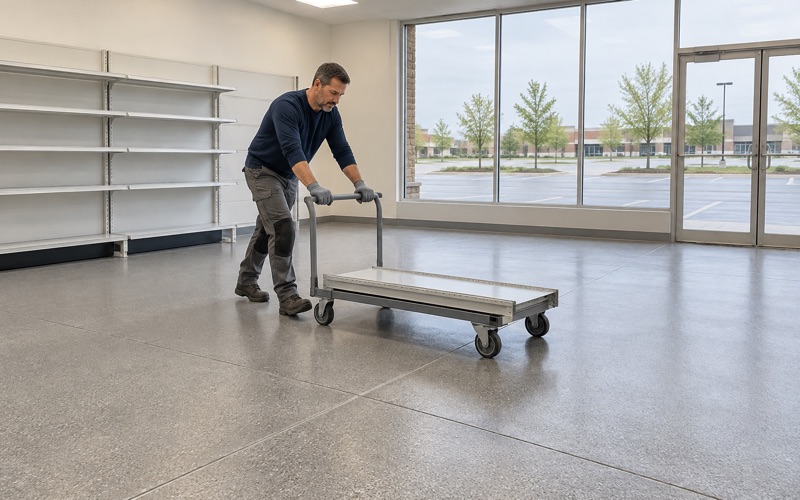
A shelving base rolled onto a new quartz-coated floor in a Tinley Park strip-center tenant suite.

Commercial Epoxy Flooring

Coated floors for service bays, showrooms, clinics, gyms and event spaces, phased around opening hours and built for the traffic each one sees.

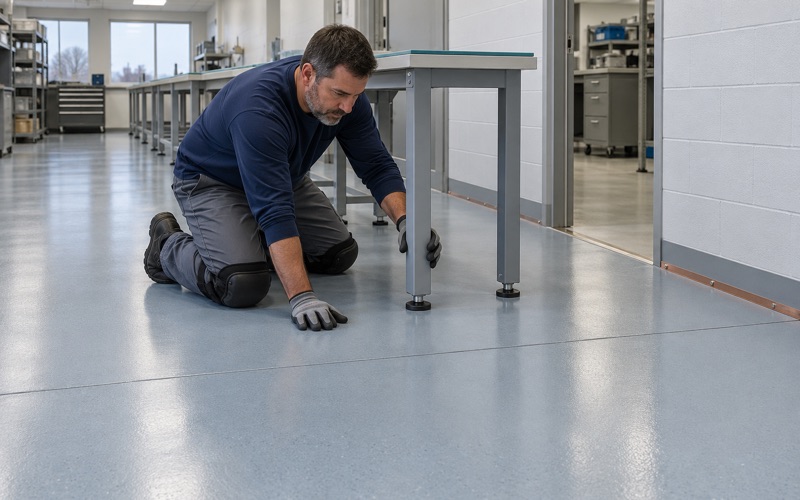
A workbench leveled on a static-dissipative floor in an electronics assembly room near I-80 in Tinley Park.

ESD Flooring

Static-dissipative and conductive epoxy floors for electronics work, labs and server rooms, grounded and resistance tested at completion.

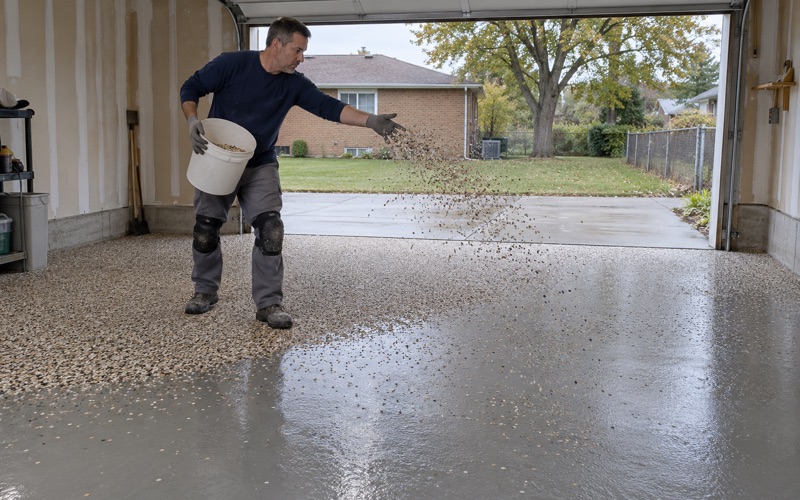
Vinyl chip mid-broadcast over a wet base coat in a detached garage behind a Tinley Park brick ranch.

Flake Epoxy Floor

Vinyl flake epoxy floors with full or partial broadcast, chosen blends and chip sizes, and a clear topcoat that takes tires, salt and daily wear.

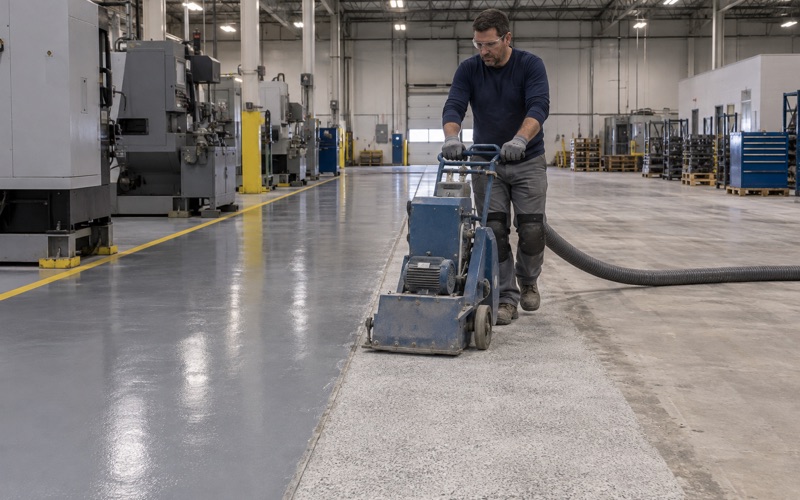
A shot blaster profiling a light manufacturing plant floor near Tinley Park before a high-build epoxy.

Industrial Epoxy Flooring

High-build epoxy and urethane floors for warehouses, plants and docks, sized to forklift traffic and chemical exposure, with marked aisles.

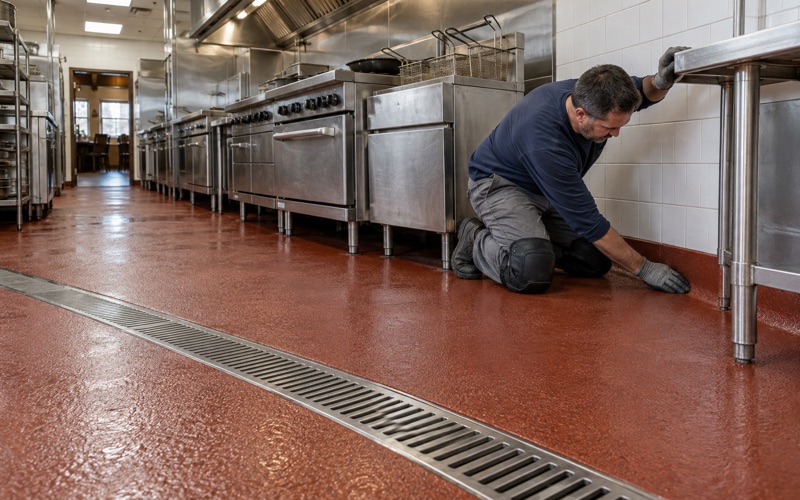
A textured urethane cement floor with an integral cove under the cook line of a Tinley Park restaurant kitchen.

Commercial Kitchen Flooring

Seamless urethane cement and resin kitchen floors with coved bases, sloped drains and slip-resistant texture, installed around restaurant hours.

Experience Behind Every Floor

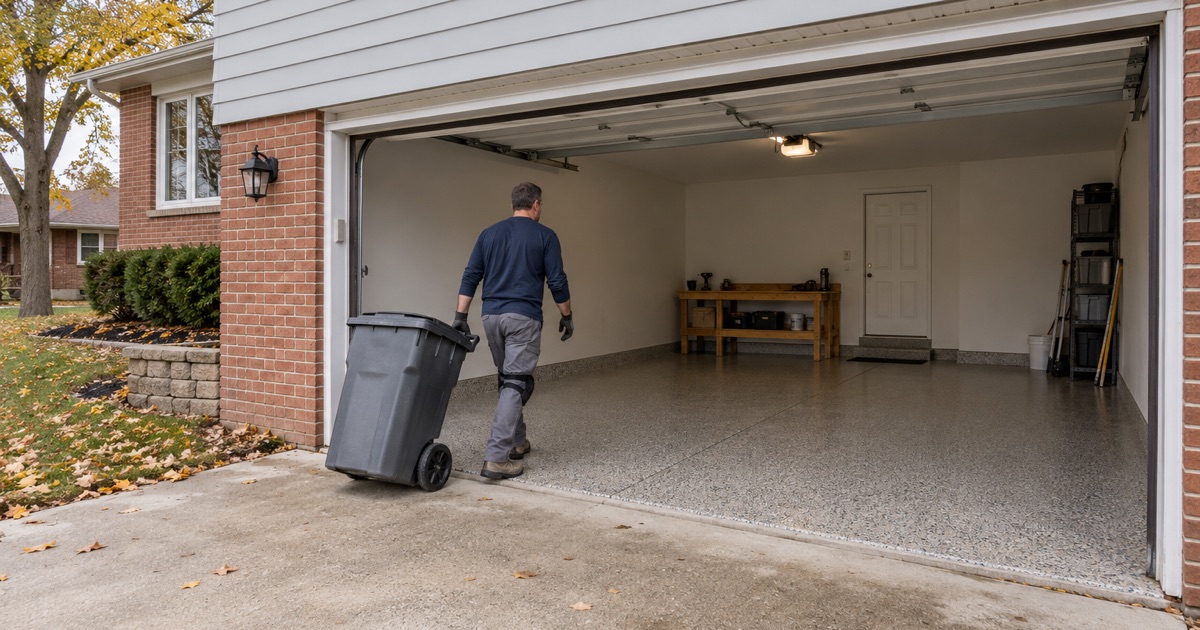
A finished gray, tan and black flake floor in the attached two-car garage of a Tinley Park split-level, a trash cart wheeled back inside.

More Than 20 Years of Floor Coating Work

We have been preparing and coating concrete floors for more than two decades. That time has covered garage slabs pitted by road salt, basements with old paint and tile glue, and commercial floors that had to reopen the next morning, and every one of those lessons is written into how we scope a job today.

Why Choose Tinley Park Epoxy Flooring

Ground, Never Etched, Concrete Prep

Every slab we coat is opened with a diamond grinder or a shot blaster to a measured ICRI surface profile, so the primer bonds into sound concrete rather than sitting on a glazed skin. An acid etch skips that step and leaves a floor that peels in sheets the first winter.

Moisture Tested Before the Price Is Final

No proposal is final until a moisture test is part of it, whether the slab is in a basement or a garage. Tinley Park garage floors were specified without a vapor retarder underneath, so we test rather than assume, instead of selling a coating that blisters once vapor pushes up behind it.

A Proposal You Can Check Against the Floor

Our written scope names the product line, the number of coats and the finished thickness, so the completed floor can be measured against the quote. Vague bids that say only “epoxy coating” leave the buyer no way to tell a thin roll-on from a built-up system.

Salt-Ready Garage Systems

Garage coatings here are chosen to stand up to the brine and rock salt that ride in on tires from December to March. A thin single coat lets chloride-laden meltwater reach the concrete, so we build enough film and a chemical-resistant topcoat to keep it on the surface instead.

Licensed Village by Village

Illinois has no state flooring license, so we check each village’s own license, bond and insurance rules before booking, including the Tinley Park contractor license and its 20,000-dollar surety bond. Contractors who skip that step can have a permit or a job stopped at the worst moment.

Garage Floors, Ground and Coated

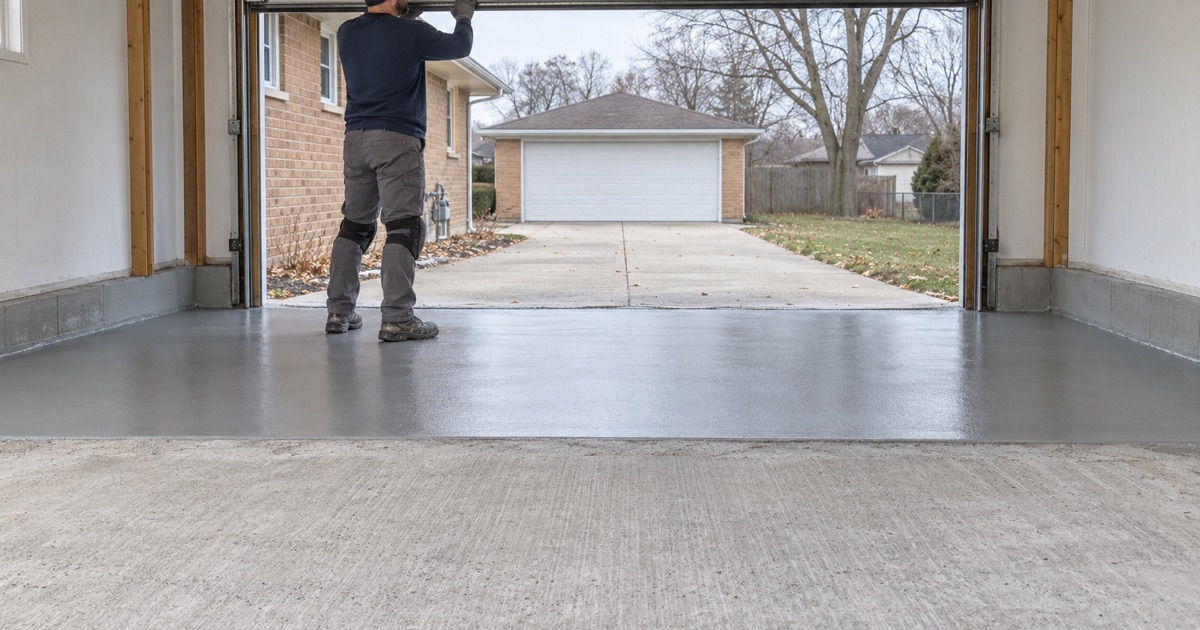
A detached two-car garage behind a Tinley Park ranch with its slab half ground and half coated, the overhead door being lowered.

The Epoxy Garage Floor Process, Start to Finish

An epoxy garage floor job starts with a slab check for cracks, old coatings and moisture, then moves to grinding, crack repair, primer, the build coat or flake broadcast, and a topcoat. We give you a written schedule for foot traffic and parking, so you know when the car can come back in rather than guessing.

Attached Garage Coatings Without Dust in the House

Most Tinley Park homes with a garage have an attached one, which puts the work a door away from the kitchen or laundry room. We capture grinding dust at the machine with a vacuum, seal the house door, and pick low-odor systems where the family will be home during the cure.

Detached and Unheated Garage Floors

Detached garages, often two-car buildings at the back of the lot, sit unheated through the winter and swing hard between cold and warm. We schedule these floors for weather that keeps the slab warm enough to cure, and we choose a system that tolerates the freeze-thaw cycling the building will see.

Moisture Testing a Garage Slab

The village garage spec calls for concrete over 4 inches of stone with no vapor retarder named underneath, and the residential code allows that for garages. Nothing stops ground moisture from moving up through the slab, so we run a plastic sheet or calcium chloride test before choosing the primer.

Cracks, Spalls and Pitted Garage Concrete

Hairline shrinkage cracks, spalled control joints and salt pitting are mapped and repaired before the coating goes down. When a slab has heaved, settled or broken through, we say so plainly, because coating a floor that needs replacement only hides the problem for a season.

What Brine and Rock Salt Do to Bare Concrete

Calcium chloride and rock salt deicers soak into bare concrete with meltwater, and repeated freezing pops the surface into flakes and pits. A coated floor keeps that brine on top, where it can be squeegeed out, rather than letting it work into the paste of the slab.

Coating a Garage Floor in Cold Weather

Epoxy and polyaspartic coatings cure by chemical reaction, and a cold slab slows that reaction or stalls it. We read slab temperature and the dew point spread before mixing, and an unheated garage in deep winter is told to wait for spring rather than receive a floor that never fully hardens.

Hot Tire Pickup and Thin Coatings

Hot tire pickup happens when a warm tire softens a thin coating and pulls it off the concrete as the tire cools. A ground slab with a 100% solids epoxy base and a polyaspartic or polyurea topcoat resists it, while a one-coat paint or water-based kit is where the problem usually starts.

DIY Epoxy Kits Versus a Professional Floor

Store-bought kits are mostly thin water-based or low-solids products rolled over an acid-etched slab. A professional system is ground, primed and built up in measured coats, so the difference shows up as film thickness, bond strength and how long the floor lasts under tires.

Epoxy Garage Floor Cost and What Moves It

Garage floor pricing depends on square footage, crack repair, the condition of any old coating, the moisture result and the system chosen. One online estimate puts a typical garage between $1,870 and $2,700, and our written quote shows exactly which of those factors moved your number.

What a Floor Coating Warranty Leaves Out

Most coating warranties exclude moisture vapor coming up through the slab, and many also exclude impact damage and cracks that open later. We name those exclusions before you sign, starting with moisture, so the warranty you receive matches what you believed you were buying.

Basements, Split-Levels and Ejector Pits

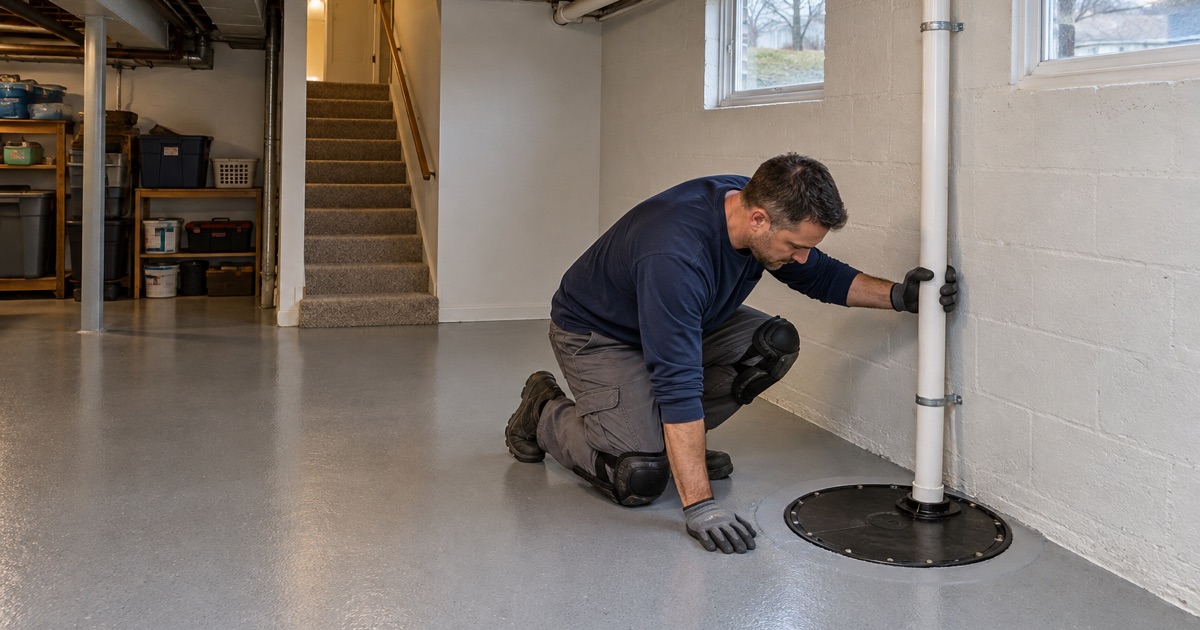
A coated split-level lower level in Tinley Park with the ejector basin’s sealed cover set flush and an overhead sewer line on the wall.

Basement Floor Epoxy and the Moisture Question

A basement slab sits in the ground and carries moisture from the soil below, so the first question is not color but vapor. We run a calcium chloride test under ASTM F1869 or relative humidity probes under ASTM F2170 and read the result against the ASTM F710 thresholds before choosing a basement floor epoxy system.

Split-Level Lower Floors and Partial Basements

A large share of Tinley Park homes have a partial basement, most often the lower level of a split-level. Those floors sit only partly below grade, often with a step-down family room and a laundry area, and we treat each slab section on its own moisture reading rather than assuming one answer for the house.

Removing Old Paint, Patches and Tile Glue

Older basement floors often carry layers of porch paint, patching compound and black mastic left from vinyl tile. We grind those down to sound concrete before coating, because a new floor bonded to an old, failing layer will peel off with it.

Coating Around Sump Pits, Ejector Pits and Floor Drains

The village code sends basement floor drains to an ejector and footing-drain water to a sump, so a typical basement here has both pits set into the slab. We coat around those fixtures, keep lids and gas-tight covers removable, and leave drain grates working.

Coating a Basement After Water Gets In

After a seepage or backup event, the slab has to be cleaned, the source fixed and the concrete given time to dry before any coating goes down. We measure moisture again after cleanup, because a coating applied over a wet slab will lift as the water tries to leave.

Efflorescence and White Powder on the Floor

White powder on a basement floor is usually efflorescence, salts carried up by moisture and left behind as the water evaporates. It tells us vapor is moving through the slab, so we treat it as a moisture signal and grind it away before testing rather than coating over it.

Moisture-Mitigation Primer for Basement Slabs

When a test shows more vapor than a standard epoxy can tolerate, a moisture-mitigation primer goes down first. It is a separate, higher-cost layer named in the scope, and it is the difference between a coating that stays bonded and one that blisters within a year.

Laundry Rooms, Workshops and Home Gyms

A coated basement floor handles washer drips, dropped tools and gym mats well, as long as the system suits the use. We pick a thicker build for a workshop, a textured topcoat near the laundry, and a resilient surface under weights so the floor fits how the room is actually used.

Basement Floor Coating Cost Factors

The price of a basement coating moves with square footage, how much old material has to come off, the moisture result, and whether a mitigation primer is needed. We put each of those items on its own line in the proposal so you can see what the moisture reading added.

A Coating Is Not Radon Mitigation or Waterproofing

An epoxy floor does not seal out radon or stop water, and we never sell it as either. Radon reduction in Illinois is licensed mitigation work under IEMA, and leaking cracks should be repaired at the source before any floor coating is installed.

Flake, Metallic and Polished Looks

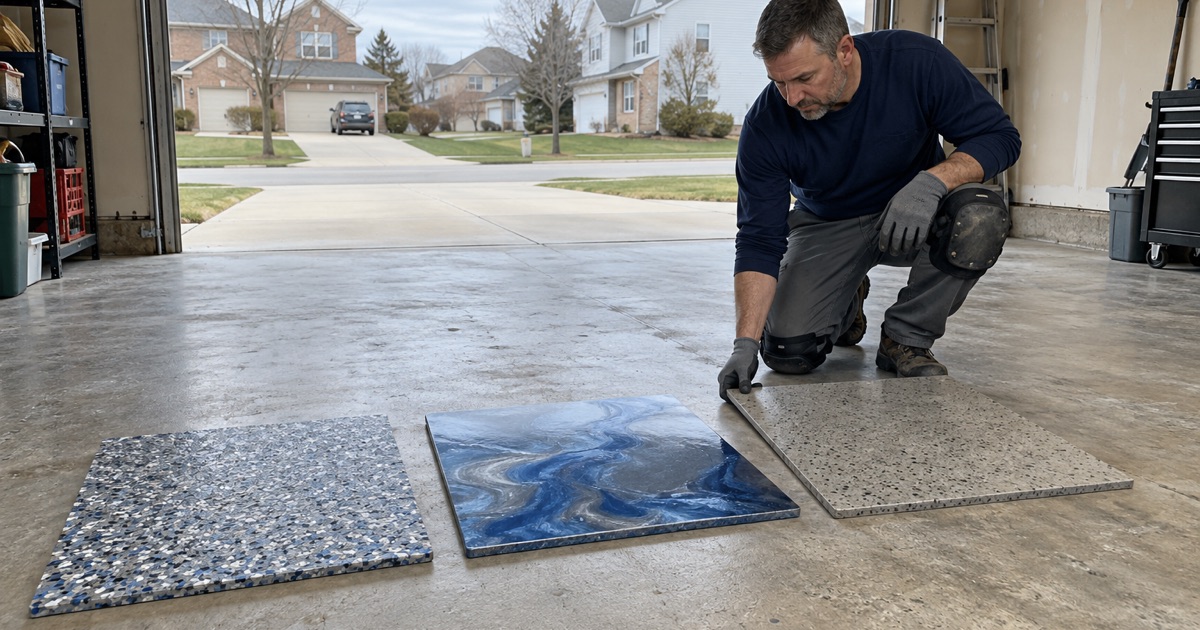
Flake, metallic and polished concrete sample boards laid side by side on a bare garage slab in Tinley Park.

Vinyl Flake Floors, Blends and Chip Sizes

A vinyl flake broadcast is scattered into wet epoxy and locked under a clear topcoat, hiding small slab flaws and adding texture underfoot. Larger chips give a bolder look while smaller chips read closer to a granite pattern, and we show samples on your concrete rather than a brochure.

Metallic Epoxy Floors with a Marbled Finish

Metallic epoxy uses pigment that moves as it is worked, creating swirls and depth across the floor. It takes a flat, well-ground slab, careful mixing and an installer who works the pattern in one pass, because a stopped edge shows as a line in the finished floor.

Polished Concrete and Aggregate Exposure

Polished concrete is ground in stages and hardened with a lithium silicate densifier, then polished to the sheen you choose. The depth of the grind decides how much stone shows, from a light cream finish to a full aggregate look, and we test a small area first so you see it before we commit.

Choosing Gloss, Satin or Matte Topcoats

Gloss topcoats look sharp but show dust and tire marks, while satin and matte finishes hide daily wear better. We help you pick a sheen based on how the room is used and lit, rather than defaulting to the shiniest option on the sample board.

Quartz Broadcast Floors for Color and Grip

A quartz aggregate broadcast brings color and slip resistance in a single step, with colored sand locked into the coating. It is a common choice for kitchens, locker rooms and ramps, where grip is specified by the broadcast and the topcoat rather than promised as a slogan.

Solid Color Epoxy Coatings

A solid color coating is the simplest floor we install, a pigmented epoxy with a clear or tinted topcoat. It suits workshops, utility rooms and commercial back rooms, where easy cleaning and a bright surface matter more than decoration.

Sunlight, UV Exposure and Ambering

Epoxy can yellow, or amber, when sunlight reaches it through an open garage door or a showroom window. We use a UV-stable polyaspartic or polyurea topcoat where light hits the floor, so the color stays true rather than drifting toward tan.

Saw-Cut Lines, Borders and Logos

Saw-cut lines, color borders and logos can be set into a coated or polished floor to mark zones or add branding. We lay them out before the final coats so the pattern sits within the floor rather than on top of it.

Dealerships, Showrooms, Kitchens and Event Spaces

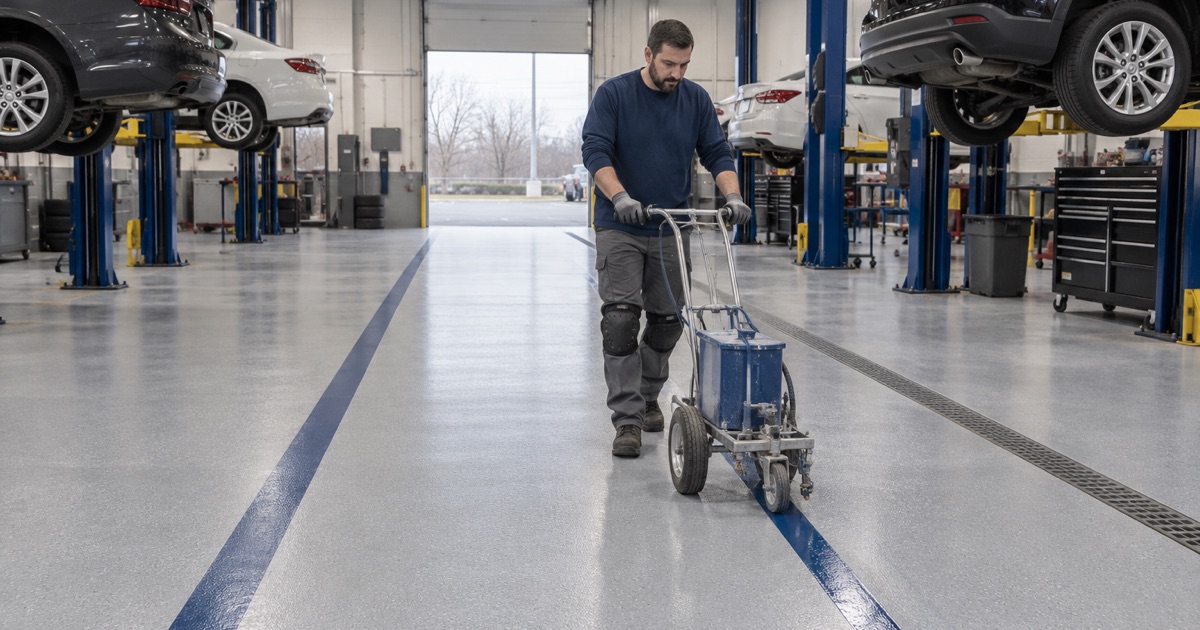
A contrasting egress aisle stripe laid along the coated service bays of a Tinley Park auto dealership.

How Commercial Epoxy Flooring Jobs Differ

A commercial floor carries heavier loads, harsher cleaners and tighter schedules than a garage. We plan the system around the actual traffic and chemicals, phase the work around business hours, and document the scope so a facility manager can sign off on it.

Dealership Service Bay Floors

Auto dealers are a large part of the local economy, and their service bays take hot tires, fluid drips and brine every winter. We build those floors with a chemical-resistant topcoat and a texture that stays safe when wet, so technicians are not working on a slick surface.

Retail and Furniture Showroom Floors

Showroom floors have to look good and reopen quickly, often the next morning. We phase the grinding and coating by section, use fast-curing polyaspartic topcoats where the schedule demands it, and keep dust captured so merchandise stays clean.

Striped Egress Aisles in a Contrasting Color

The Tinley Park building code amends IBC 1014.2 to require a 44-inch egress aisle striped in a contrasting color for its full length. We lay those stripes into the coating system itself, so the marking lasts as long as the floor rather than wearing off like tape.

Banquet Hall and Hotel Back-of-House Floors

The village’s convention center and hotels sit beside banquet halls and event venues whose back-of-house floors take carts, spills and constant cleaning. We specify a durable, easy-clean coating with enough texture for wet corridors, scheduled around events rather than through them.

Restaurant Kitchens and Coved Bases

The FDA Food Code calls for coved floor and wall junctures in food service areas, and an inspector looks for that seal. We install a coved base that runs up the wall, so water and grease cannot collect in the corner where a standard baseboard would leave a gap.

Urethane Cement for Hot Water and Cleaners

Urethane cement handles hot water, steam cleaning and harsh chemicals that would soften a standard epoxy over time. We recommend it for kitchens, breweries and wash-down areas, where thermal shock is part of the daily routine.

Gym and Fitness Floors

Gym floors take dropped weights, rolling equipment and daily disinfecting. We build a thicker system with impact resistance and a textured finish, so the floor holds up to hard use without becoming slippery when cleaned.

Light Manufacturing and Warehouse Floors

Forklift and pallet jack wheel loads grind through thin coatings quickly, especially at turns and dock doors. We specify a high-build industrial epoxy or urethane system for those lanes, so the floor matches the equipment rather than the cheapest bid.

Illinois VOC Limits on Floor Coatings

The Chicago area falls within the 2015 ozone nonattainment area, and 35 Ill. Adm. Code Part 223 sets VOC limits for floor and industrial maintenance coatings. Those limits bind the person applying the product, so we choose compliant systems and keep the paperwork for every job.

Night and Weekend Floor Installation

Businesses that cannot close get their floors done in overnight and weekend windows, phased by section. We plan cure times around opening hours, so the space is ready for staff and customers when the doors open.

Areas We Serve

Tinley Park Epoxy Flooring provides epoxy-flooring throughout the greater Tinley Park area, with the same crews and the same standards on every job.

Good to know

Frequently Asked Questions

How long does an epoxy garage floor take from start to parking on it?

Most two-car garages are ground, repaired and coated over one to two working days, depending on the system and the cracks we find. Foot traffic usually returns within a day, and we give a vehicle date in writing based on the topcoat and the slab temperature rather than a fixed promise.

Do I need a permit to have my floor coated in Tinley Park?

Painting, tiling and similar finish work sits on the permit-exempt list the village kept from the residential code, so a floor coating usually needs no permit. The village still asks owners to call the Building Department to confirm, and every contractor must hold a village license before starting work.

Is your company licensed to work in the village?

Illinois has no state license for flooring contractors, so the license that matters is the local one. Tinley Park requires a contractor license, a surety bond and a written guarantee from every contractor, and we confirm those requirements for each village before a job is booked.

Why do you grind the slab instead of acid etching it?

Acid etching cleans the surface but leaves a shallow, uneven profile and residue that can weaken adhesion. Diamond grinding or shot blasting opens the concrete to a measured surface profile on the ICRI scale, which gives a 100% solids epoxy or polyaspartic primer something real to bond into.

What moisture test do you run before coating?

Depending on the slab, we use a plastic sheet check under ASTM D4263, a calcium chloride test under ASTM F1869, or in-situ relative humidity probes under ASTM F2170. The result goes into the written scope, and it decides whether the floor needs a moisture-mitigation primer before the main coat.

Will an epoxy floor stop water or radon coming into my basement?

No. A floor coating is a wear surface, not waterproofing, flood protection or radon mitigation. Radon reduction in Illinois is licensed mitigation work under IEMA, and leaks need to be fixed at the source before any coating goes down.

Can you coat a garage floor in the middle of winter?

In a heated or attached garage that holds temperature, often yes. An unheated detached garage in deep winter usually cannot keep the slab far enough above the dew point for the coating to cure properly, so we schedule those for a warmer stretch instead.

Which coatings do you use on commercial kitchen floors?

Where hot water, steam and strong cleaners hit the floor daily, we usually recommend urethane cement rather than a standard epoxy. It tolerates thermal shock, takes a coved base at the wall, and can carry a broadcast texture for slip resistance.

What does a coating warranty usually exclude?

Moisture coming up through the slab is the most common exclusion, followed by damage from impact, chemical spills outside the product's rating, and cracks that open after installation. We walk through the written exclusions before the job is sold so nothing in them comes as a surprise.

Do you work nights or weekends for businesses?

Yes. Showrooms, banquet halls, gyms and clinics are usually phased so the floor is ground and coated in sections, with overnight and weekend windows used when a space cannot close during business hours.

Ready to Get Started?

Request a free quote today and we'll get back to you fast.